AI in Dentistry 2026
A Practical Compliance, Risk & Implementation Framework for UK & Irish Dental Practices
This report helps dentists understand how to safely adopt AI technologies while remaining compliant with GDPR and professional regulations. Written for practice owners, managers, and clinical leads navigating AI adoption responsibly.
Table of Contents
Executive Summary
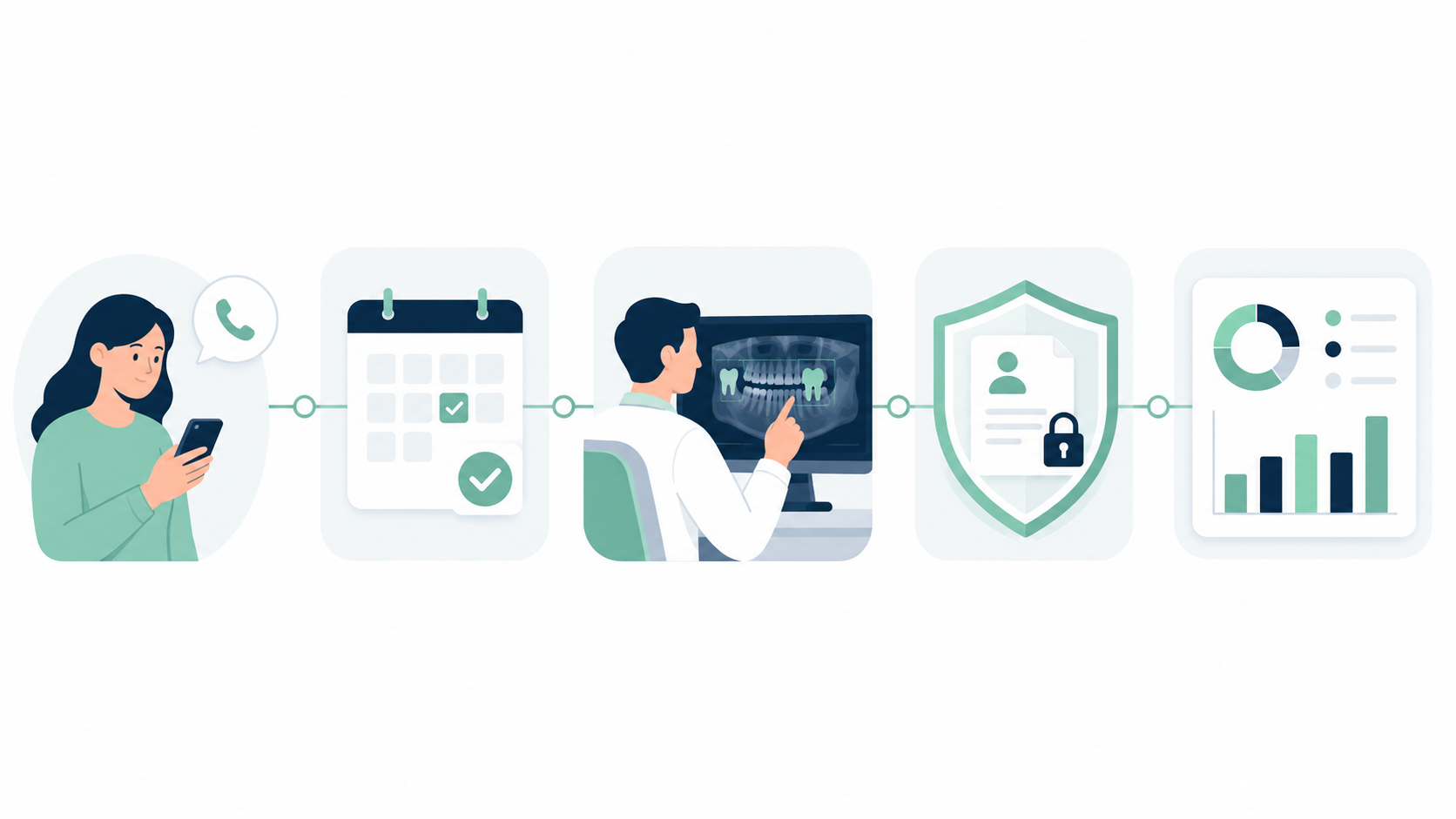
Artificial intelligence is rapidly entering mainstream dental practice operations across the UK and Ireland. From automated call handling and appointment booking to clinical audio transcription and radiographic analysis, AI tools are increasingly being adopted to improve efficiency and reduce administrative burden.
However, the regulatory and governance implications of AI adoption are not widely understood at practice level.
Dental records contain special category health data under UK GDPR and EU GDPR. When AI systems process, store or transmit this data, practices assume additional compliance responsibilities. In some cases, AI functionality may cross into areas that engage medical device regulation, indemnity considerations, and heightened cybersecurity risk.
The purpose of this white paper is not to discourage AI adoption. Properly implemented, AI can improve patient access, streamline operations and reduce burnout within dental teams. However, responsible implementation requires clarity.
This document provides a structured framework to help practice owners and managers:
- Understand the distinction between administrative and clinical AI
- Identify key GDPR and data protection obligations
- Conduct appropriate vendor due diligence
- Recognise emerging regulatory and indemnity considerations
- Implement AI in a structured, low-risk manner
The practices that will benefit most from AI in the coming years will not necessarily be the fastest adopters, but the most disciplined.
1. The Current State of AI in Dentistry
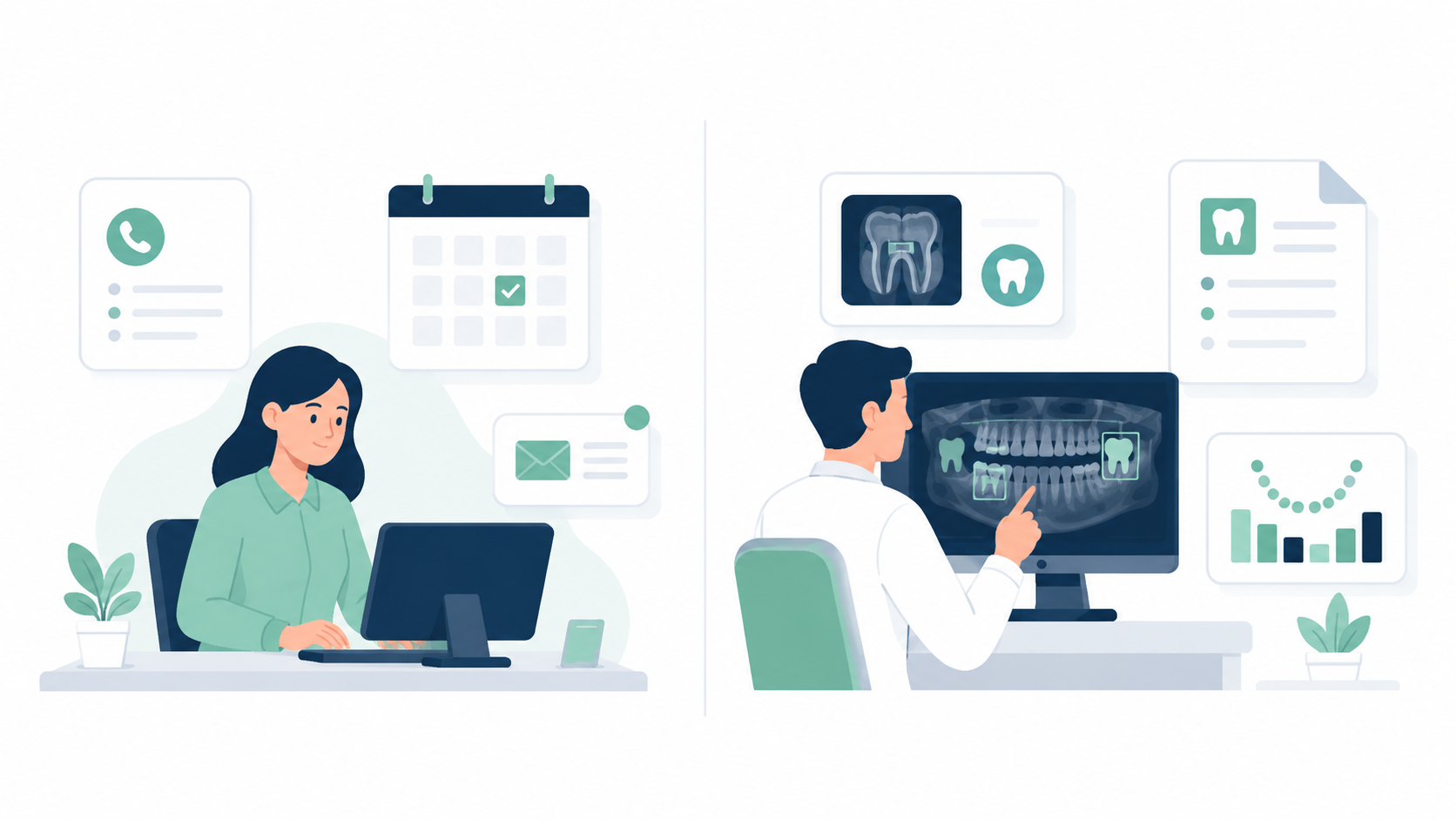
AI is no longer theoretical within dentistry. It is actively being deployed across multiple operational layers of dental practice. Broadly, current AI applications fall into the following categories:
1.1 Administrative Automation
These systems aim to reduce repetitive operational tasks, including:
- •AI receptionists and call handling systems
- •Appointment booking automation
- •Recall and reminder systems
- •Chat-based enquiry handling
- •Workflow routing and triage
These tools typically focus on communication and scheduling rather than clinical decision-making.
1.2 Clinical Support & Documentation
A newer and rapidly expanding category includes:
- •AI-powered clinical audio transcription
- •Automated note summarisation
- •Radiographic analysis assistance
- •Treatment planning suggestions
- •Risk flagging systems
These systems interact directly with patient health data and, in some cases, influence clinical documentation or workflow.
1.3 Why This Matters
From a compliance perspective, not all AI carries the same risk profile. Many practice owners evaluate AI tools primarily on efficiency gains or cost reduction. However, regulatory exposure differs significantly depending on how the system processes data and whether it influences clinical records or decisions.
Understanding this distinction is the foundation of responsible AI adoption.
2. Administrative AI vs Clinical AI: Understanding the Risk Divide
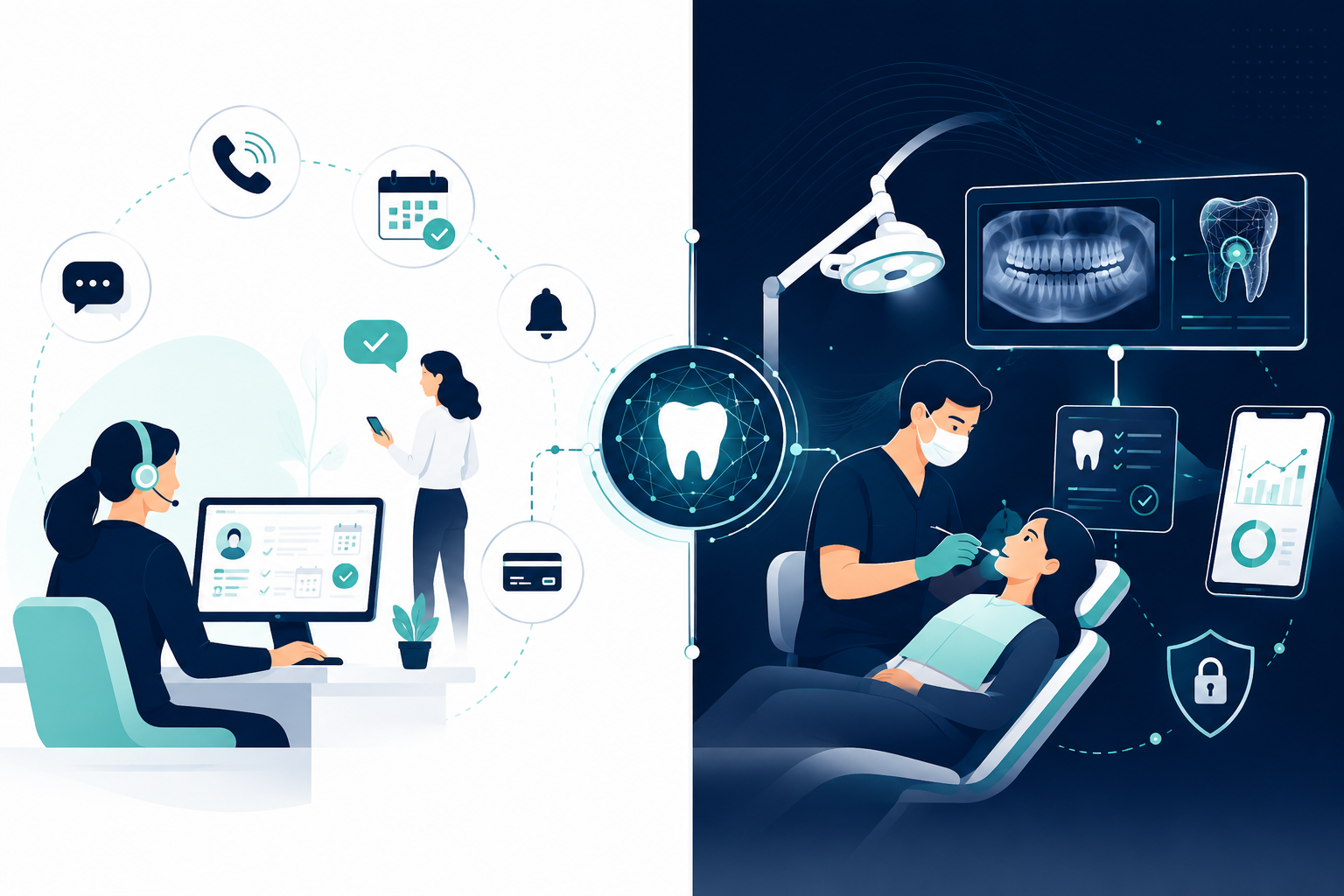
One of the most important governance distinctions in dental AI is the difference between administrative AI and clinical AI. While both may process patient information, the regulatory exposure and risk intensity vary considerably.
2.1 Administrative AI
- •AI reception systems that answer calls
- •Automated appointment booking
- •Diary management integration
- •After-hours enquiry handling
Risk profile:
- • Data protection compliance required
- • Lower clinical liability exposure
- • Typically outside medical device regulation
- • Operational rather than diagnostic
2.2 Clinical AI
- •Audio note transcription tools
- •AI-generated clinical summaries
- •Radiograph analysis assistance
- •Treatment recommendation engines
Risk profile:
- • High data protection sensitivity
- • Increased indemnity implications
- • Potential medical device regulatory engagement
- • Greater scrutiny in the event of error
2.3 Why the Distinction Is Critical
Many dental practices adopt AI under the broad assumption that "AI is AI." From a regulatory and governance perspective, this is inaccurate.
An AI receptionist system that books appointments carries a fundamentally different risk profile to an AI system that transcribes clinical discussions or generates treatment summaries.
3. Understanding GDPR in Dental AI
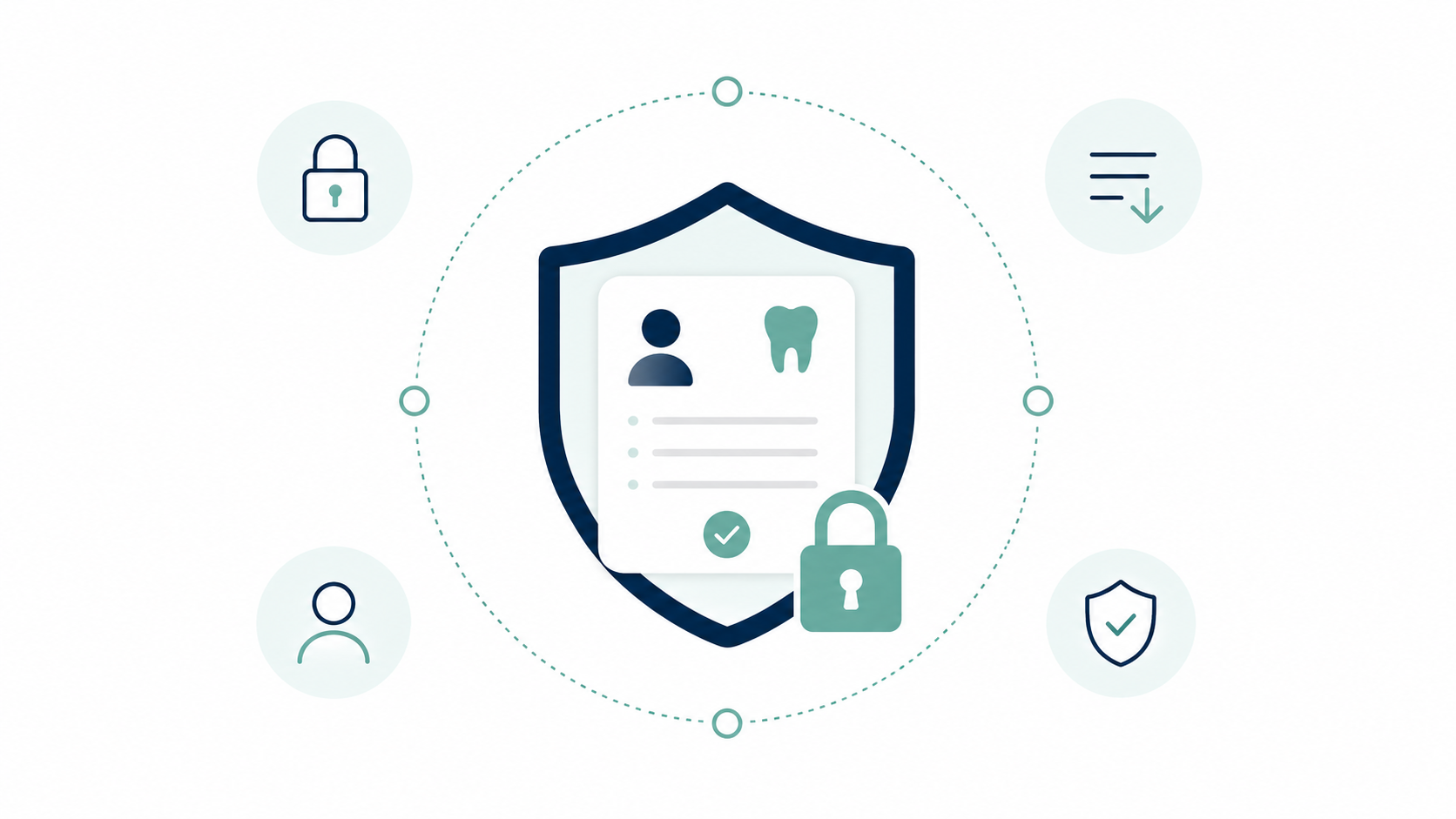
Dental practices in the UK and Ireland operate within one of the most sensitive categories of data protection law. Patient records contain health data, classified as special category personal data under both UK GDPR and EU GDPR. This classification significantly raises the compliance threshold when AI systems are introduced.
3.1 Special Category Data
Health data includes:
- Clinical notes
- Radiographs
- Medical histories
- Consultation recordings
- Treatment plans
- Audio transcriptions
When AI systems process any of this data, enhanced safeguards are required under Article 9 of GDPR. Practices must ensure:
- A lawful basis for processing exists
- Additional conditions under Article 9 are satisfied
- Appropriate technical and organisational measures are in place
AI adoption does not dilute these obligations. It increases the need for clarity.
3.2 Controller vs Processor Responsibilities
In most AI deployments within dentistry, the dental practice remains the Data Controller and the AI vendor acts as a Data Processor. This distinction matters.
The practice remains legally responsible for:
- •Determining the purpose of processing
- •Ensuring lawful use
- •Selecting compliant vendors
- •Responding to data subject requests
Even if the AI system is external, liability does not transfer.
3.3 Lawful Basis for AI Processing
Practices typically rely on provision of healthcare, legal obligations, or public health interests. However, introducing AI into workflows may alter how data is processed - for example recording consultations, sending data to external AI servers, or storing audio files. These changes must be assessed and documented.
4. Data Processing Agreements (DPA)
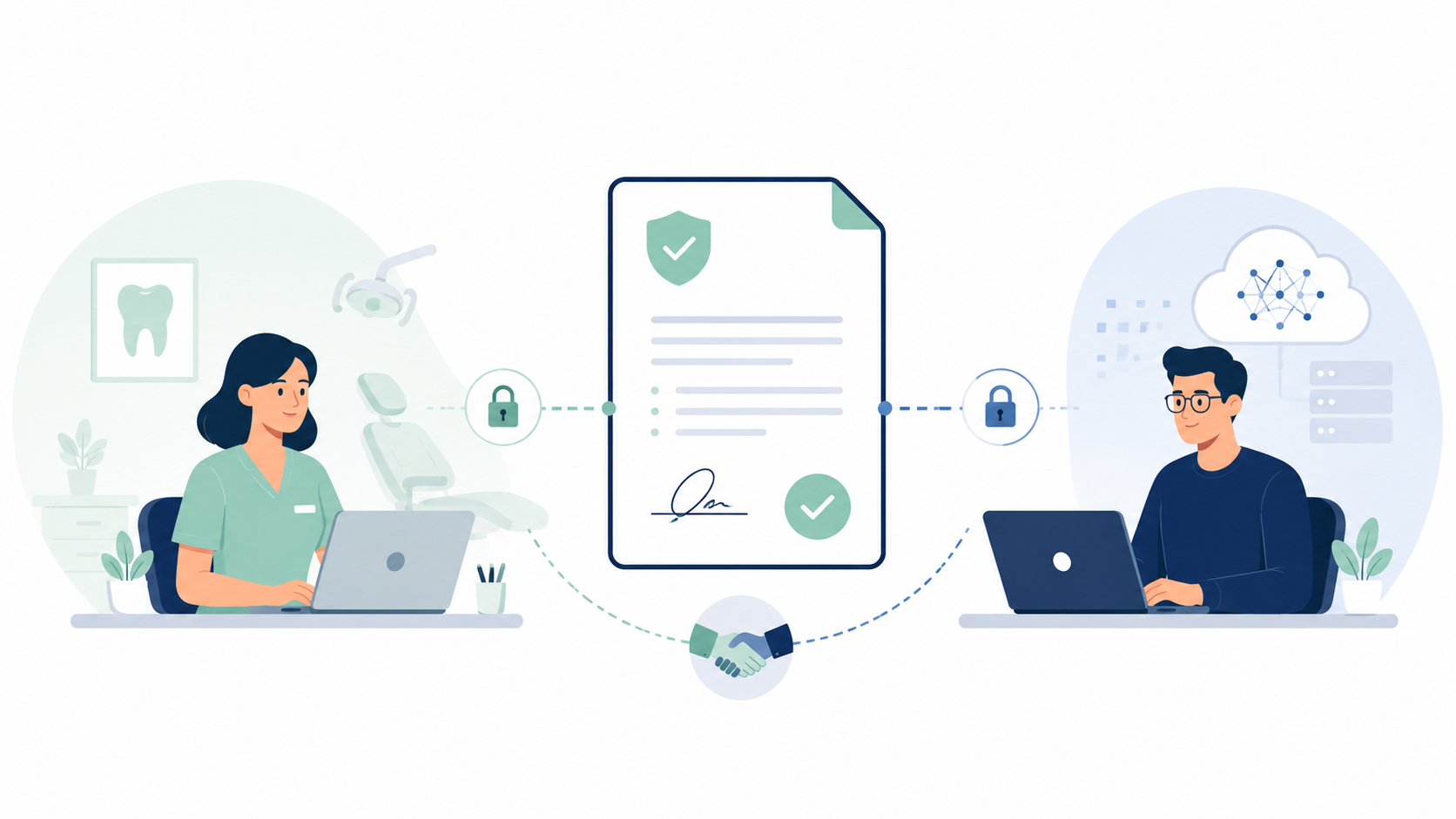
Any AI vendor handling patient data must operate under a formal Data Processing Agreement. This is not optional.
A compliant DPA should clearly define:
- Scope of processing
- Nature of data handled
- Duration of processing
- Security measures
- Subprocessor involvement
- Breach notification timelines
- Data deletion procedures
4.1 Subprocessors
Many AI vendors rely on underlying infrastructure providers such as cloud hosting platforms or AI model providers. Practices should ask: Who are the subprocessors? Where are they located? Is data shared further downstream? Transparency at this level is essential.
4.2 Retention Policies
Particular caution is required when audio is involved. Practices should confirm whether raw audio is stored, for how long, whether it is encrypted at rest, and whether it is deleted after transcription. Audio files represent a significantly larger data exposure than structured text records.
4.3 Breach Protocols
The DPA should specify timeframe for vendor breach notification, cooperation obligations, and documentation requirements. Dental practices have strict reporting obligations to the ICO (UK) and Data Protection Commission (Ireland). Delayed reporting due to unclear vendor obligations increases risk.
5. Data Residency & International Transfers
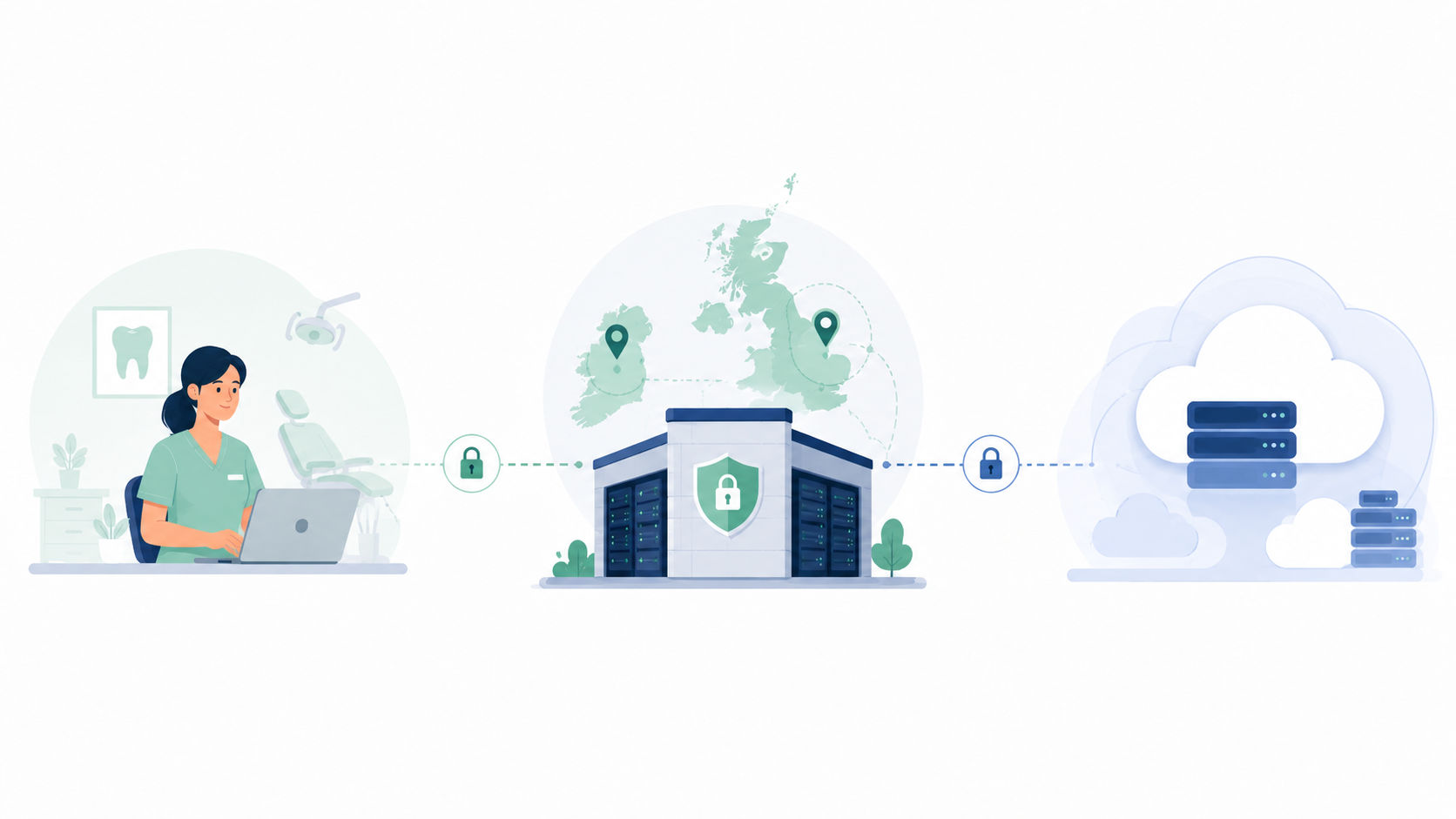
One of the most misunderstood risks in AI adoption is where data is physically processed. AI systems often rely on cloud infrastructure, external model providers, and cross-border processing pipelines.
5.1 UK and EU Hosting
If data is processed entirely within the United Kingdom or the European Union, compliance is generally more straightforward, assuming appropriate safeguards exist. However, many AI tools route data through US-based systems.
5.2 International Transfers
If patient data leaves the UK or EU, additional safeguards are required:
- Standard Contractual Clauses (SCCs)
- UK International Data Transfer Addendum
- Transfer Impact Assessment
Practices should not assume that an AI vendor's website statement is sufficient. Written confirmation should be obtained.
5.3 Questions Practices Should Ask
- •Where is data processed?
- •Is data stored outside the UK or EU?
- •Are subprocessors located overseas?
- •Are SCCs in place?
- •Has a Transfer Impact Assessment been conducted?
Failure to clarify data flows is one of the most common compliance oversights in AI deployment.
6. Data Protection Impact Assessments (DPIA)
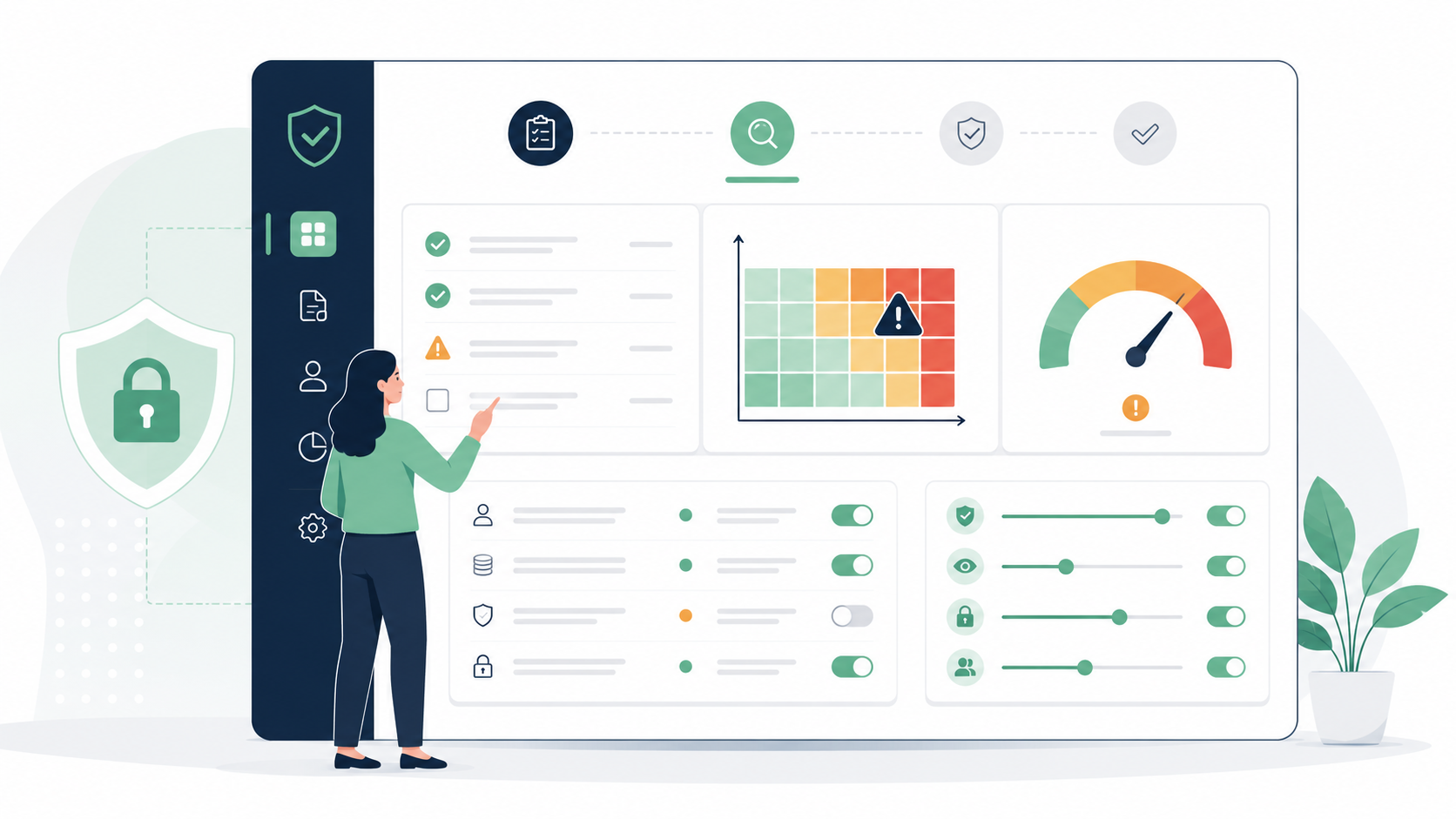
In many cases, the introduction of AI into dental workflows will require a Data Protection Impact Assessment. This is particularly true where special category data is processed, new technology is introduced, large-scale or systematic monitoring occurs, or audio recording is implemented.
A DPIA is not a bureaucratic formality. It is a risk management document.
6.1 What a DPIA Should Cover
- Nature of data processed
- Purpose of processing
- Necessity and proportionality
- Identified risks
- Mitigation measures
- Residual risk
6.2 Common AI DPIA Considerations
- •Data accuracy risks
- •Potential bias
- •Hallucination or summarisation errors
- •Audio storage exposure
- •Access control policies
- •Human oversight mechanisms
Regulators do not expect perfection. They expect documented risk assessment, clear reasoning, mitigation planning, and evidence of due diligence.
7. Clinical Accuracy & AI Hallucination Risk

AI systems that generate or summarise clinical information introduce a new category of operational risk: output reliability. While transcription accuracy has improved significantly in recent years, no AI system is error-free. In clinical environments, even minor inaccuracies can have disproportionate consequences.
7.1 Transcription and Summarisation Errors
Common risks include:
- •Misheard medication names
- •Incorrect dosages
- •Omitted medical history details
- •Fabricated clinical phrasing
- •Incorrect summarisation of patient complaints
In many cases, these errors are subtle and may not be immediately obvious during busy clinical workflows. Where AI systems produce summarised notes rather than verbatim transcription, the risk of distortion increases.
7.2 The "Hallucination" Problem
In AI terminology, hallucination refers to the generation of plausible but incorrect information. Within dentistry, this could include suggesting a diagnosis not discussed, adding inferred information, or structuring notes in ways that misrepresent nuance.
7.3 Human Oversight Is Non-Negotiable
AI-generated clinical documentation must be reviewed by a qualified clinician before being finalised in the patient record. Best practice includes:
- Mandatory clinician review prior to record locking
- Audit sampling of AI-generated notes
- Clear internal policy that AI assists but does not replace clinical judgement
AI can enhance efficiency. It cannot assume professional responsibility. That responsibility remains with the clinician.
8. Indemnity & Liability Considerations
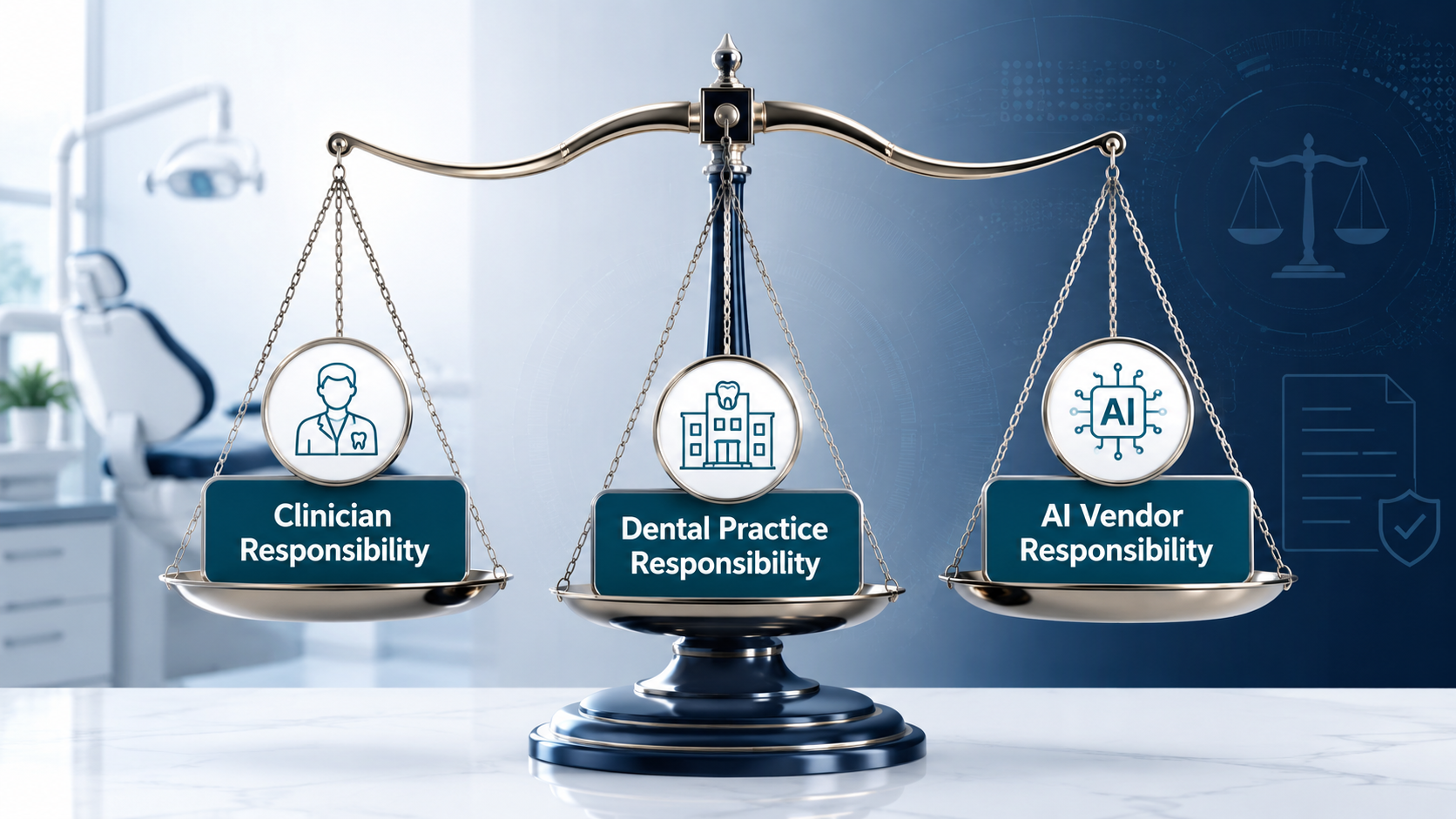
The introduction of AI into documentation workflows raises important indemnity questions. Many dental indemnity policies were written before widespread AI use in clinical settings.
Practice owners should consider:
- •Does current indemnity cover AI-assisted documentation?
- •Is disclosure required to indemnity providers?
- •Does policy language address digital documentation tools?
8.1 Documentation Standards
Clinical records must remain accurate, contemporaneous, defensible, and transparent. If AI-generated notes are used, clinicians must ensure notes reflect actual consultation content, no assumptions are inserted, and clinical reasoning remains documented appropriately.
The presence of AI does not lower documentation standards. In fact, it may increase scrutiny.
8.2 Accountability Chain
If an AI system contributes to a documentation error, responsibility will typically follow this chain:
1.Clinician (record owner)
2.Practice (data controller)
3.Vendor (processor obligations)
Regulators and indemnity bodies are unlikely to accept "the AI made an error" as a defence if proper review mechanisms were not in place.
9. Medical Device Regulation (MDR) Boundaries
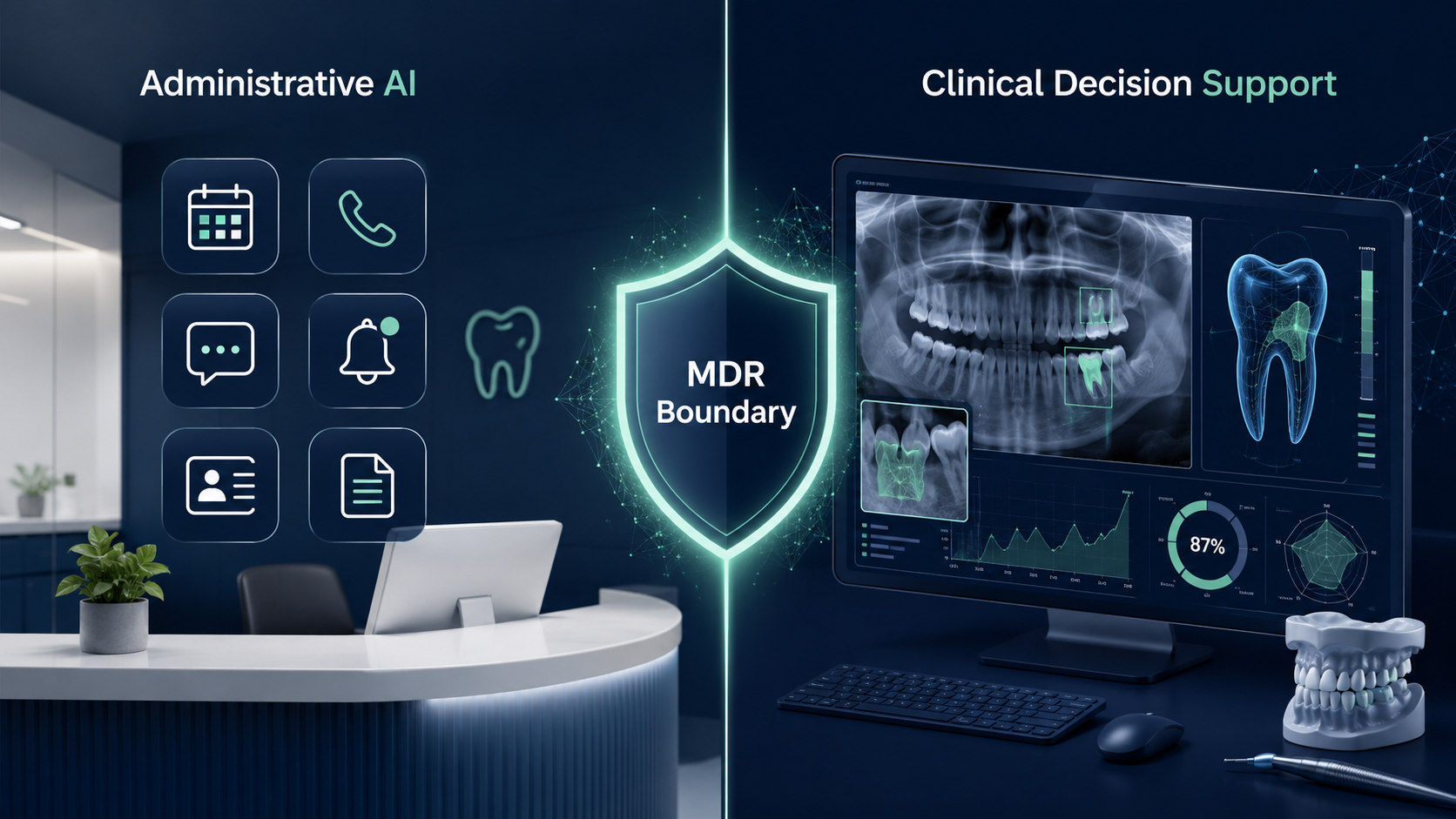
AI tools that operate purely as administrative systems typically fall outside medical device regulation. However, AI that performs diagnostic, predictive or treatment-support functions may fall within UK MDR or EU MDR frameworks. This boundary is not always obvious.
9.1 Assistive vs Decision-Support AI
Assistive AI
- •Supports documentation or workflow
- •Does not suggest diagnoses
- •Does not recommend treatment
Decision-Support AI
- •Interprets radiographs
- •Suggests risk scores
- •Recommends treatment pathways
The second category may engage medical device regulation.
9.2 Why This Matters for Dental Practices
If a vendor's AI system interprets clinical data, produces risk assessments, or suggests treatment outcomes, the vendor may require medical device certification. Practices should confirm whether the AI system is classified as a medical device, whether regulatory approval is in place, and what documentation exists to support compliance.
10. Patient Transparency & Consent
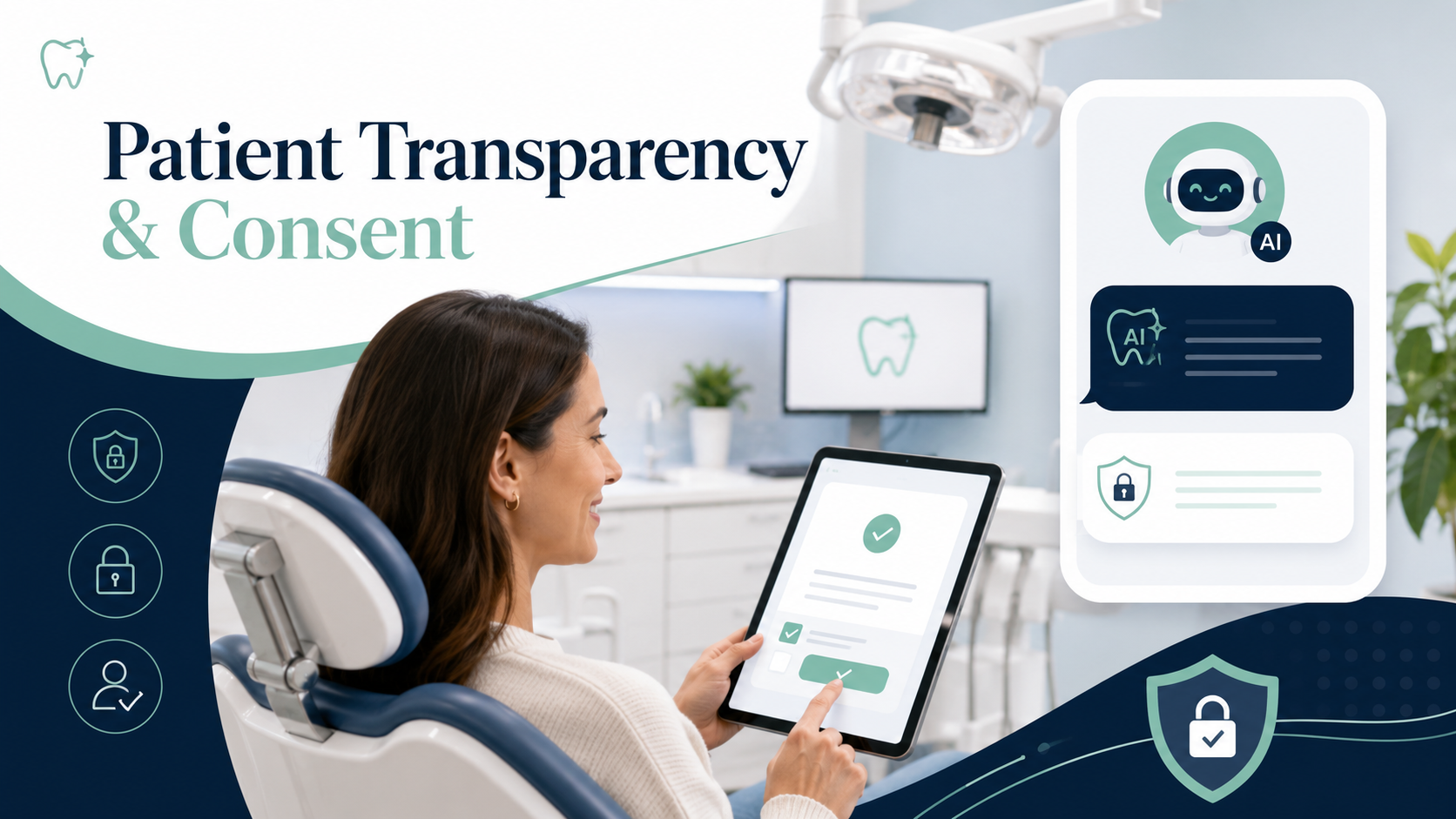
Introducing AI into dental workflows changes how patient data is processed. Patients should not discover retrospectively that their consultation was recorded or transcribed by AI. Transparency builds trust.
10.1 Consultation Recording
If consultations are recorded for AI transcription purposes, practices should consider updating privacy policies, including disclosure in consent documentation, and displaying signage where appropriate.
10.2 Privacy Policy Updates
Privacy notices should clearly explain use of AI tools, purpose of processing, data storage locations, retention periods, and rights of the data subject. Generic privacy policies may not sufficiently cover AI use cases.
10.3 Communicating Clearly
A simple statement such as:
"Your consultation may be recorded for documentation and quality assurance purposes."
can significantly reduce misunderstanding. Practices that proactively communicate AI usage demonstrate maturity and professionalism.
11. Audio Recording Risk in Dental Consultations
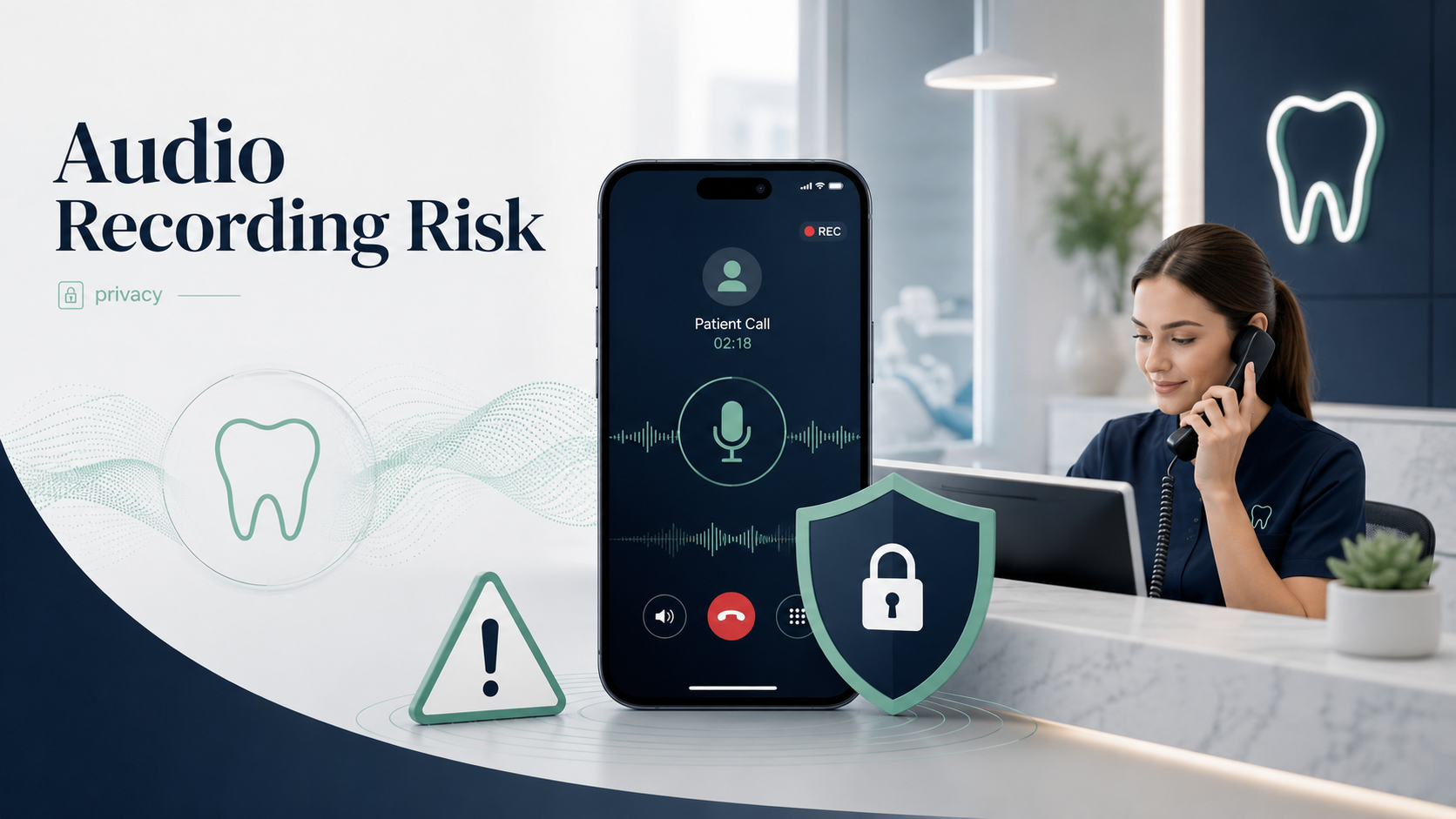
The introduction of AI-powered audio transcription significantly changes the data risk profile of a dental practice. Traditional dental records are text-based. Audio recording introduces a new data class with different exposure characteristics.
11.1 Why Audio Data Is Higher Risk
Audio recordings capture entire conversations, include contextual nuance, may contain incidental disclosures, are larger and more complex files, and require different storage controls. Unlike structured text entries, raw audio contains full conversational content, including potentially sensitive personal disclosures beyond immediate clinical relevance.
If breached, audio files may present greater reputational and legal risk than standard records.
11.2 Storage & Retention Considerations
- •Is raw audio retained after transcription?
- •If retained, for how long?
- •Where is it stored?
- •Is encryption applied at rest and in transit?
- •Who has access?
In many cases, minimisation principles suggest that audio should be deleted once verified transcription is complete, unless there is a documented clinical justification for retention.
11.3 Access Controls
Access to audio data should be role-restricted, logged and auditable, and protected by multi-factor authentication. Broad access permissions increase risk exposure. The principle of least privilege should apply.
12. Cybersecurity & AI Infrastructure Risk

AI systems introduce additional technical layers into dental practice infrastructure. Each additional integration increases the attack surface.
12.1 API Exposure
AI tools often connect to practice management software, cloud storage systems, and external AI models via APIs. Practices should confirm whether APIs are encrypted, whether tokens are securely stored, whether access logs are monitored, and whether vendor penetration testing has been conducted.
Weak API security is a common breach vector.
12.2 Cloud Infrastructure Risk
Most AI systems rely on cloud hosting providers. Questions to consider: Is hosting within UK/EU data centres? Is encryption applied at rest? Are backups encrypted? What redundancy safeguards exist?
Ransomware attacks on healthcare organisations are increasing. AI adoption should not weaken resilience.
12.3 Incident Response Readiness
Practices should ensure vendor breach notification timelines are defined, internal incident response procedures include AI systems, and data recovery processes are documented. Preparedness reduces regulatory impact if a breach occurs.
13. Vendor Due Diligence Framework
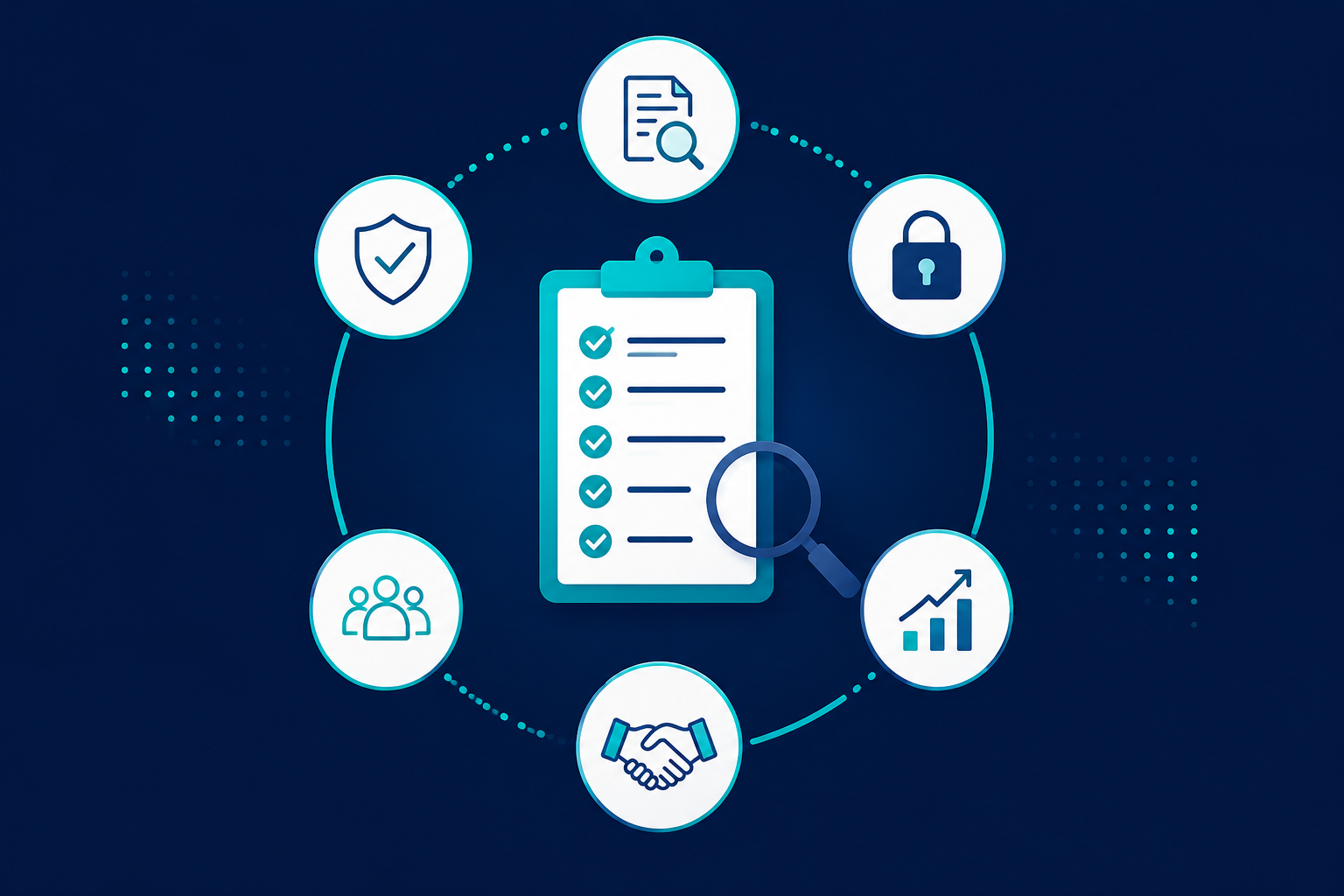
AI adoption should be treated as a governance decision, not merely a procurement decision.
13.1 Core Questions for AI Vendors
Data & Hosting
- •Where is data processed?
- •Where is data stored?
- •Is any data transferred outside UK/EU?
- •Are SCCs in place?
Security
- •Is encryption applied at rest and in transit?
- •Has independent penetration testing been conducted?
- •Are access controls role-based?
- •Is MFA enforced?
Compliance
- •Is a DPA provided?
- •Are subprocessors disclosed?
- •Are retention policies clearly defined?
- •Is the system classified under MDR?
13.2 Documentation Matters
Practices should retain signed DPA, DPIA documentation, vendor security documentation, and decision rationale. In the event of regulatory scrutiny, documented due diligence is a powerful defence.
14. Implementation Framework for Responsible AI Adoption
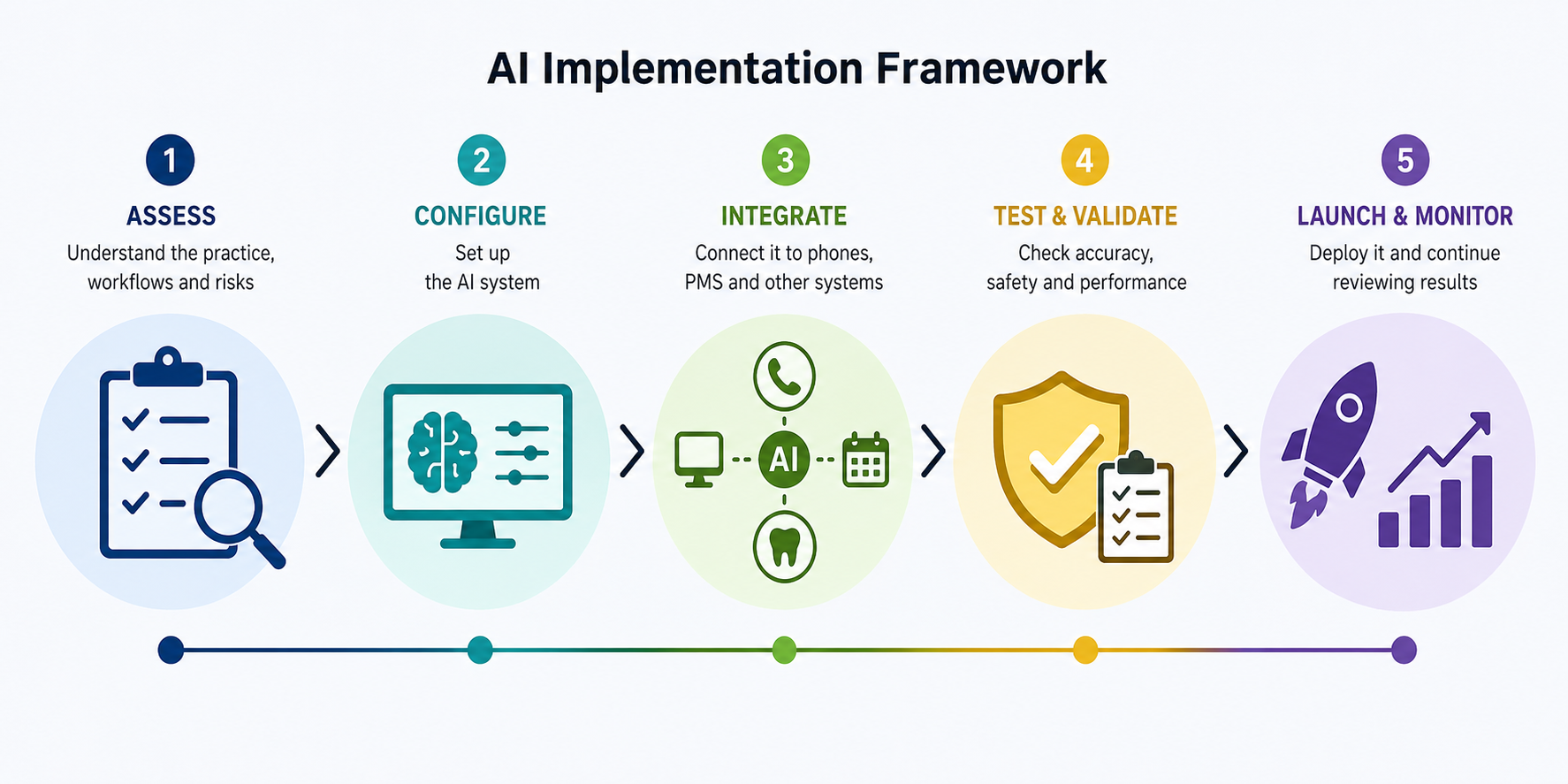
AI implementation should follow a structured governance pathway. Unstructured deployment increases risk.
1.Define AI Category - Is the system administrative AI, clinical AI, or decision-support AI? Risk assessment depends on classification.
2.Conduct DPIA - Assess data sensitivity, scale of processing, potential harm, and mitigation measures. Document findings formally.
3.Review Vendor Agreements - Ensure DPA signed, subprocessors identified, and international transfer safeguards documented.
4.Update Documentation - Update privacy policy, internal data protection records, consent forms (if applicable), and staff policies.
5.Train Staff - Ensure staff understand what the AI does, what it does not do, when human review is required, and how to report anomalies.
6.Monitor & Audit - Establish periodic transcript review, security review intervals, vendor compliance updates, and incident tracking processes.
AI governance is ongoing, not a one-time event.
15. AI Reception vs Clinical AI: A Risk Comparison
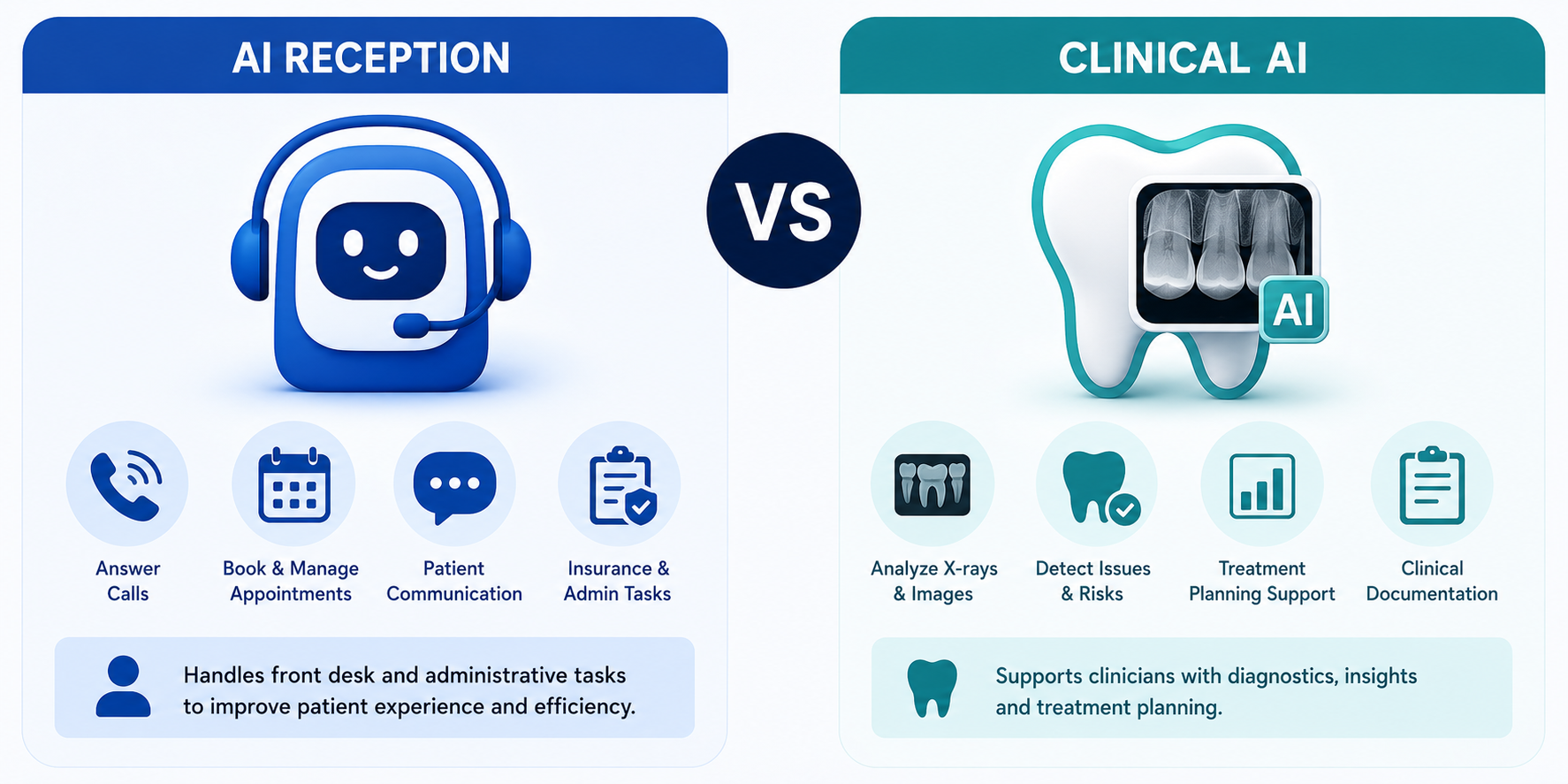
As AI adoption accelerates, practices must recognise that not all AI carries equal regulatory weight. A structured comparison helps clarify where governance intensity should increase.
Administrative AI (e.g. AI Reception)
- •Manages booking and communication
- •Processes contact information
- •May integrate with PMS
- •Does not generate diagnoses
- •Does not alter clinical decision-making
Governance focus:
- •Data protection compliance
- •Secure integration
- •Transparent communication
Clinical Documentation AI (e.g. Audio Notes)
- •Records and transcribes consultations
- •Generates structured clinical summaries
- •Processes special category health data
- •Directly influences patient record content
Governance focus:
- •DPIA required
- •Strict retention policies
- •Mandatory clinician review
- •Vendor due diligence documentation
The appropriate level of oversight should align with data sensitivity, clinical influence, storage complexity, and regulatory exposure. Clarity at this stage prevents governance gaps later.
16. Practical Risk Scenarios
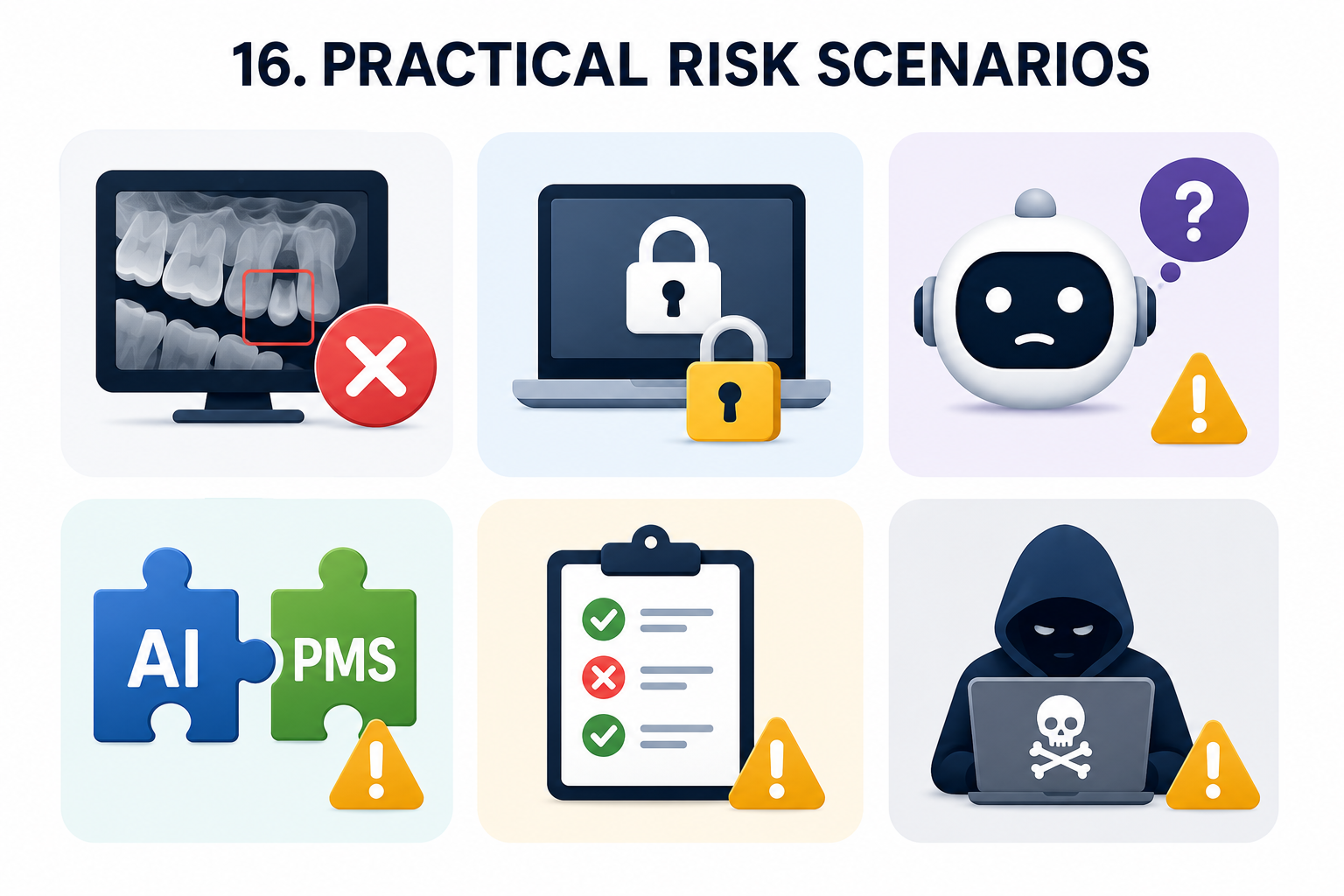
Understanding risk becomes clearer when viewed through real-world examples.
Scenario 1 – Transcription Error
An AI transcription tool mishears a medication name during consultation. The clinician does not review the transcript thoroughly before finalising the record. The patient later disputes advice given.
Risk factors:
- •Lack of structured review policy
- •Over-reliance on AI-generated notes
- •Absence of audit mechanism
Mitigation:
- Mandatory clinician verification
- Periodic transcript sampling
- Clear documentation standards
Scenario 2 – Audio Storage Breach
Raw consultation audio files are retained indefinitely in cloud storage. A security vulnerability exposes stored recordings.
Risk factors:
- •Undefined retention policy
- •Inadequate encryption
- •Insufficient vendor security oversight
Mitigation:
- Data minimisation
- Defined deletion timelines
- Vendor penetration testing confirmation
Scenario 3 – Overseas Data Transfer
An AI vendor routes data through US-based servers without documented transfer safeguards. The practice is unaware of cross-border processing.
Risk factors:
- •Lack of due diligence
- •No review of data flow
- •No SCC documentation
Mitigation:
- Written confirmation of hosting
- Transfer Impact Assessment
- Contractual safeguards
Most AI-related risk is governance-based, not technological. Proper documentation and oversight significantly reduce exposure.
17. The Emerging Regulatory Landscape
AI regulation is evolving. In the UK and Ireland, regulators are increasingly attentive to healthcare data processing, AI-driven decision systems, cross-border data transfers, and cybersecurity resilience.
While there is currently no AI-specific dental regulation, broader frameworks are tightening. Practices should anticipate:
- •Greater scrutiny of clinical AI
- •Increased enforcement around data transfers
- •Stronger expectations of documented DPIAs
- •Greater emphasis on transparency
Early governance maturity positions practices favourably.
18. Strategic Recommendations for Practice Owners
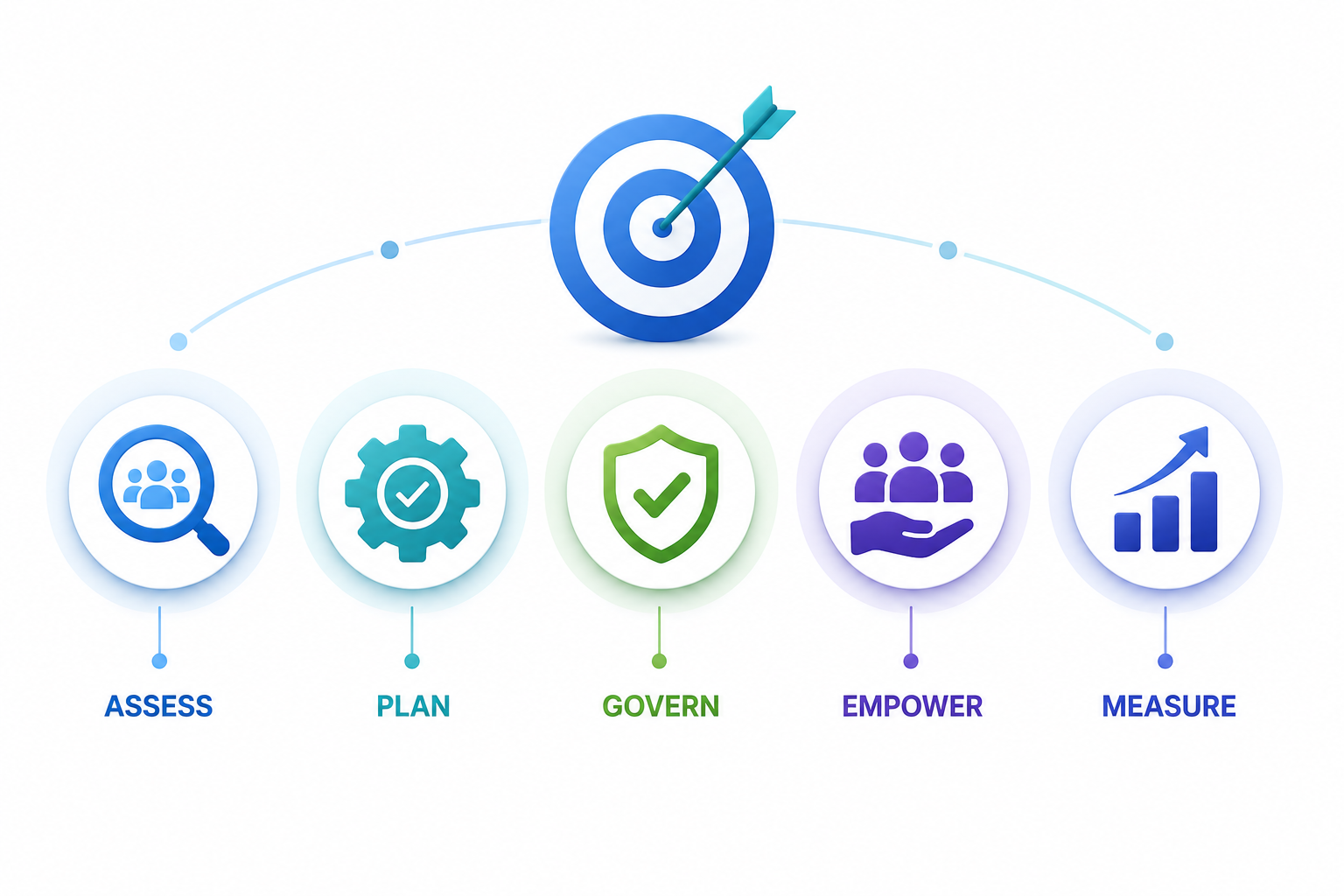
AI adoption should be deliberate, not reactive. The following principles provide a structured approach:
1.Classify the AI system before implementation
2.Match governance intensity to risk level
3.Conduct and document DPIAs where required
4.Require transparent vendor agreements
5.Confirm data residency and international transfer safeguards
6.Implement mandatory human review for clinical AI outputs
7.Update privacy documentation to reflect AI use
8.Monitor systems continuously rather than assuming compliance is static
Responsible AI adoption is not about avoiding technology. It is about implementing it with discipline.
19. AI Adoption Maturity Model for Dental Practices
Practices vary widely in governance readiness. A simple four-level maturity model can help self-assessment.
Level 1 – Experimental
Risk exposure: High
- •AI adopted informally
- •No DPIA conducted
- •Vendor documentation limited
- •Policies not updated
Level 2 – Operational
Risk exposure: Moderate to High
- •AI integrated into workflow
- •Basic vendor agreements in place
- •Informal review procedures
- •Limited documentation
Level 3 – Structured
Risk exposure: Controlled
- •Formal DPIA conducted
- •Clear DPA signed
- •Defined retention policies
- •Staff training delivered
- •Human oversight mandated
Level 4 – Governed
Risk exposure: Strategically managed
- •Ongoing compliance review
- •Vendor audits documented
- •Regular transcript sampling
- •Cybersecurity testing reviewed
- •AI governance integrated into strategy
Practices do not need to reach Level 4 immediately. However, awareness of maturity stage supports informed progression.
20. Frequently Asked Questions
Is AI legal in dentistry?
Yes. There is no prohibition on AI use within dental practice. However, AI systems must comply with existing regulatory frameworks including GDPR, data protection law, and, where applicable, medical device regulation. The legality depends on how the AI is implemented and governed.
Do patients need to give explicit consent for AI use?
Not always. In many cases, processing is justified under the lawful basis of healthcare provision. However, transparency remains essential. If consultations are recorded or processed by AI, privacy policies and patient communications should clearly reflect this.
Is a DPIA always required?
Not in every case. However, where special category health data is processed using new technologies, particularly where audio recording or systematic processing occurs, a DPIA is strongly advisable and often required. When in doubt, conducting one provides governance protection.
Can AI-generated clinical notes be relied upon without review?
No. AI-generated documentation must be reviewed by a qualified clinician before finalisation. AI assists documentation. It does not replace professional responsibility.
Does using AI increase indemnity risk?
Potentially, particularly where AI influences clinical documentation or treatment decisions. Practices should confirm that their indemnity provider is aware of AI-assisted workflows and that policy terms are appropriate.
Is data stored outside the UK or EU automatically non-compliant?
No. International transfers are permitted under GDPR provided appropriate safeguards such as Standard Contractual Clauses and Transfer Impact Assessments are in place. The key issue is documentation and transparency.
Is administrative AI lower risk than clinical AI?
Generally, yes. Administrative AI typically focuses on communication and scheduling, whereas clinical AI directly interacts with health records and may influence patient documentation. Governance intensity should reflect this difference.
What is the single most important protection when adopting AI?
Documentation. A well-documented risk assessment, vendor due diligence record, and governance framework provide substantial protection in the event of regulatory scrutiny.
22. About ViveoAI
ViveoAI develops AI-powered administrative systems for dental practices in the UK and Ireland.
Its focus is on secure, structured automation of non-clinical workflows, including AI reception and appointment management.
ViveoAI's approach prioritises:
- Data protection compliance
- Transparent vendor agreements
- Clear distinction between administrative and clinical AI
- Ongoing governance discipline
The company advocates for responsible AI adoption across the dental sector.
Explore AI Reception Technology for Your Dental Practice
If you would like to understand how AI reception technology can support your practice while maintaining compliance and patient trust, book a short demonstration with the ViveoAI team.